Latest Articles
Need Expert Help with Your Ottawa Home's Exterior?
Get a Free Estimate

Your Source for Expert Tips, Insights, and Advice on Maintaining and Enhancing Your Home's Exterior in Ottawa.
Home Maintenance, Downspout Placement, Ottawa Canada
In Ottawa, where heavy snow, spring thaws, and powerful summer storms are part of everyday life, the proper place of a downspout is far more than a design choice. It is one of the most important decisions you can make to protect your home from water damage, foundation issues, and costly repairs. This guide explains everything an Ottawa homeowner needs to know about smart, safe, and code-conscious downspout placement, in clear language you can actually use.
To understand the proper place of a downspout in Ottawa, Canada, you first need to think about our climate. Ottawa experiences heavy snowfall, freeze–thaw cycles, sudden spring melts, and intense summer rainstorms. All of that water has to go somewhere, and if your downspouts are not placed correctly, it often ends up where you least want it: against your foundation, in your basement, or on your neighbour’s property.
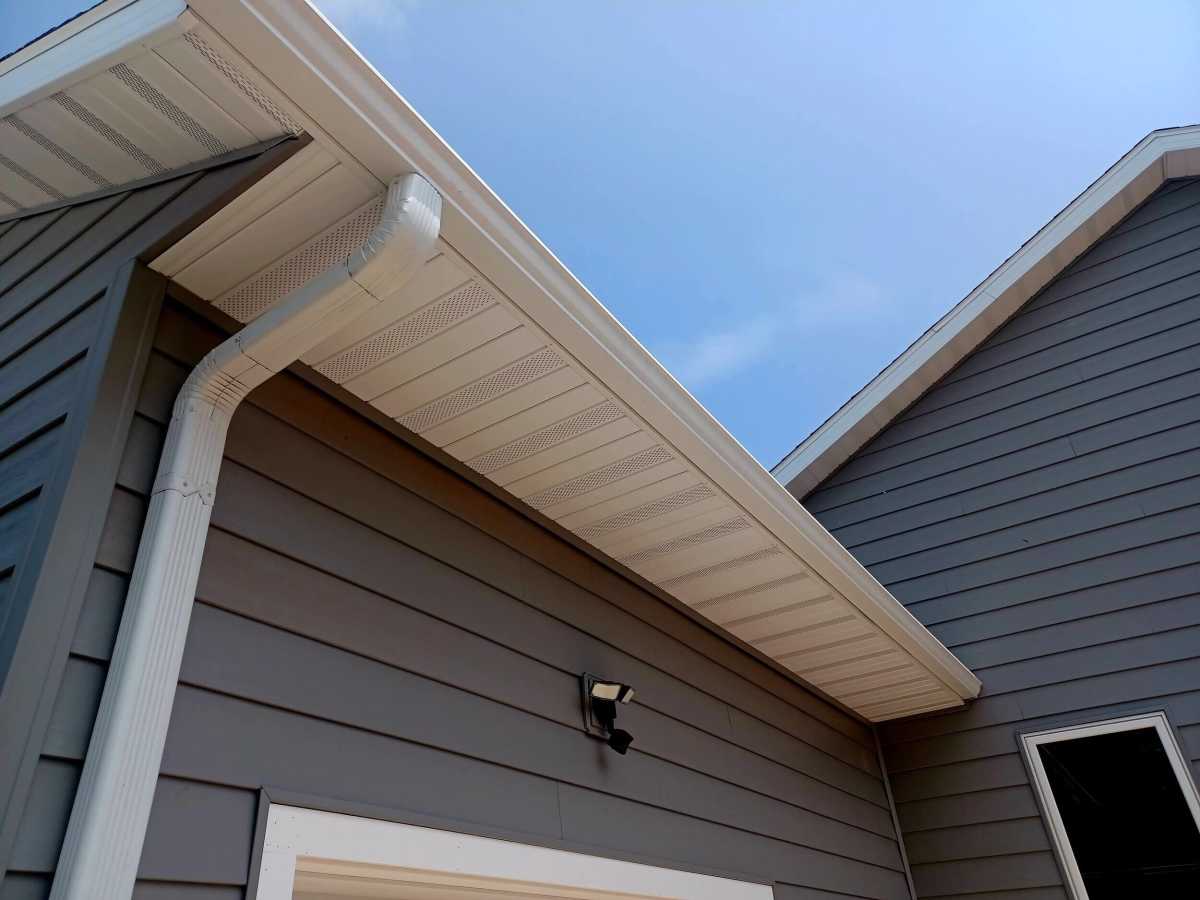
Good downspout placement is your first line of defence. When downspouts are installed and directed properly, they safely move water from your roof to a location where it can soak into the ground without causing damage. When they are placed poorly, they can actually concentrate water in risky areas, increasing the chance of foundation cracks, ice buildup, and disputes with neighbours over runoff and flooding.
While every property is unique, there are some widely accepted principles that define proper downspout placement in Ottawa and across Ontario. Think of these as the non‑negotiable basics you should always aim to follow, whether you are replacing one downspout or redesigning your entire gutter system.
The single most important rule of downspout placement is this: water must be discharged well away from your foundation. In Ottawa’s clay and mixed soils, water tends to sit and slowly seep down, putting pressure on basement walls and footings. To reduce this risk, most building professionals recommend that downspouts extend:
At least 1.8 to 2.4 metres (6 to 8 feet) away from the foundation, wherever possible.
A minimum of 1.2 metres (4 feet) from the foundation in tighter urban lots, provided the ground slopes away from the house.
This usually means adding a rigid or flexible extension to the bottom of the downspout, or connecting to an underground drainage pipe that carries water to a safe discharge point. Simply letting water fall at the base of the wall is one of the most common and serious downspout placement mistakes in Ottawa.
Even if your downspout extends several feet from the house, it will not help much if the ground slopes back toward your foundation. Proper downspout placement in Ottawa always goes hand in hand with proper grading. The ground should slope away from your home at a rate of roughly 2% or more, which means a drop of about 2 centimetres for every metre of distance (around a quarter inch per foot).
When deciding where to terminate a downspout, look at the land around your house. Ask yourself:
Does the water naturally flow away from the building, or will it pool in a low spot?
Is there a safe area, such as a lawn or landscaped bed, where water can spread out and soak in?
Could water run towards a driveway, sidewalk, or entrance and freeze into ice in winter?
The proper place of a downspout is always somewhere that works with gravity and grading, not against them. In many Ottawa neighbourhoods, small grading adjustments and carefully chosen downspout locations can dramatically reduce standing water and basement dampness.
Another key factor in downspout placement in Ottawa, Canada, is how runoff affects neighbouring properties. While exact by‑laws can vary and are periodically updated, the general principle is clear: you are responsible for managing the water from your roof on your own property. Directing a downspout so that it discharges straight onto a neighbour’s driveway, yard, or foundation area can create flooding, ice hazards, and even legal disputes.
When planning downspout placement, keep runoff at least a few feet away from side lot lines, and aim it toward areas where water can safely soak into your soil. If you live in a dense urban part of Ottawa with narrow side yards, you may need to use underground drains or French drains to move water toward the front or back of your lot without burdening your neighbours.
The proper place of a downspout in Ottawa, Canada, is shaped by more than just general building science. Our local conditions add extra layers of complexity that homeowners should understand before making changes to their gutter systems. Here are three Ottawa‑specific factors that strongly influence smart downspout placement.
Ottawa winters are famous for their temperature swings. Water that flows freely from your downspout in the afternoon can easily freeze into a solid sheet of ice by evening. That is why proper downspout placement must avoid discharging water onto:
Walkways and front steps, where ice can create dangerous slip hazards.
Driveways, especially sloped ones, where thin ice layers can be hard to see.
Public sidewalks, where you remain responsible for clearing ice and snow.
Ideally, downspouts in Ottawa should direct water to permeable surfaces such as lawns, gardens, or gravelled areas, where it can be absorbed rather than freeze into a slick surface. If you must discharge near a traffic area, extending the downspout farther and slightly re‑grading the surface can help keep water away from paths and steps.
Snow and ice on Ottawa roofs add another twist to downspout placement. When snow melts unevenly, large volumes of water may suddenly flow toward one section of gutter. If your downspouts are too few, or poorly located, that water can overflow the eavestrough and fall straight down against your foundation, even if your downspouts themselves are technically long enough and properly sloped.
For most homes, a good rule of thumb is to install a downspout for roughly every 9 to 12 metres (30 to 40 feet) of gutter. On complex roofs with multiple valleys and dormers, strategic downspout placement near valleys can help capture concentrated flows of meltwater and route them to safe discharge points. In Ottawa’s climate, more thoughtfully placed downspouts are almost always better than fewer.
Over the years, the City of Ottawa has encouraged homeowners to disconnect downspouts from older combined sewer systems and to manage stormwater on site where practical. While you should always check the latest city guidance or speak with a professional, the general direction is clear: keep stormwater out of the sanitary sewer and away from your foundation.
Many older Ottawa homes rely on weeping tiles and sump pumps to manage groundwater. Poor downspout placement forces these systems to work harder, increasing the risk of pump failures and basement flooding during heavy storms. Positioning downspouts so that water flows away from foundation drainage systems, rather than into them, is a smart, long‑term investment in your home’s resilience.

Extending downspouts several feet onto sloped lawn significantly reduces basement moisture risk.
Instead of treating downspout placement as an afterthought, it helps to walk around your Ottawa home and evaluate each wall separately. The proper place of a downspout may be different on the front, back, and sides of your house, depending on driveways, patios, gardens, and neighbouring properties. Here is how to think it through, step by step.
At the front of your home, downspouts must balance aesthetics, practicality, and safety. The proper place of a downspout here usually avoids:
Directly beside front steps, where water can freeze into ice in winter.
Discharging onto paved walkways or driveways used daily by your family.
Locations where extensions would block access or look visually intrusive.
Instead, look for spots where you can blend the downspout with columns or corners, then extend it toward a landscaped bed or lawn area. In many Ottawa neighbourhoods, homeowners also direct front downspouts toward rain gardens, which both manage runoff and add attractive curb appeal.
At the back, downspout placement often has to work around decks, patios, and sometimes walk‑out basements. The proper place of a downspout here avoids pushing water toward patio doors or the wall of a lower‑level living space. If your backyard slopes gently away from the house, you may be able to discharge to the lawn with a simple extension. If it slopes back toward the home or toward a neighbour, you may need a more structured solution, such as:
An underground pipe leading to a lower part of your yard or a swale.
A gravel‑filled trench (French drain) that disperses water safely.
A rain garden designed to temporarily hold and absorb stormwater.
Side yards in Ottawa are often narrow, with only a few feet between houses. This makes downspout placement more challenging. The proper place of a downspout in these tight spaces should:
Avoid pointing directly at the neighbour’s foundation or driveway.
Use extensions or buried pipes to carry water toward the front or back, where there is more room for it to spread out.
Consider the slope between houses to prevent water from collecting in the middle.
In many cases, the best solution is to run downspouts along the side wall but discharge them at the front or back corners, where water can be safely managed. This respects both your own foundation and your neighbour’s peace of mind.
Understanding what not to do can be just as useful as knowing best practices. Here are some of the most common downspout placement errors seen across Ottawa, and why they cause trouble in our local conditions.
Downspouts that end right at the foundation: This is perhaps the worst mistake. Water seeps down, saturates the soil, and increases the risk of cracks, leaks, and heaving during freeze–thaw cycles.
Discharge onto driveways or walkways: In winter, this often leads to ice sheets that are difficult to clear and dangerous to walk on, especially when temperatures hover around freezing.
Aiming water toward window wells: Window wells are meant to keep soil away from basement windows, not to collect roof runoff. Poor downspout placement can turn them into mini‑swimming pools during storms or spring melt.
Too few downspouts for the roof size: Overloaded gutters overflow in heavy Ottawa rains, sending water over the edge and straight down next to your walls, regardless of where the existing downspouts are placed.
Pointing downspouts directly at neighbours: Even if it seems convenient, this can create disputes, damage, and potential liability if runoff causes flooding or ice on someone else’s property.
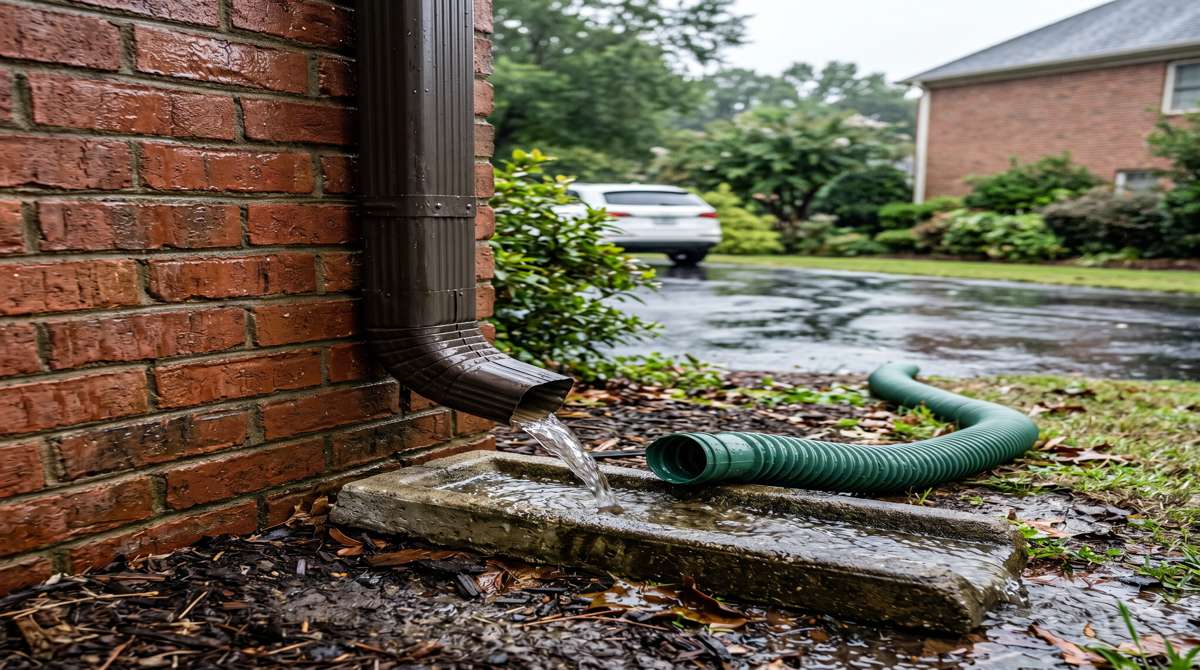
Once you have chosen the proper place for each downspout, a few simple upgrades can make the system even more effective in Ottawa’s demanding climate. These improvements are usually affordable and can be installed by handy homeowners or local contractors.
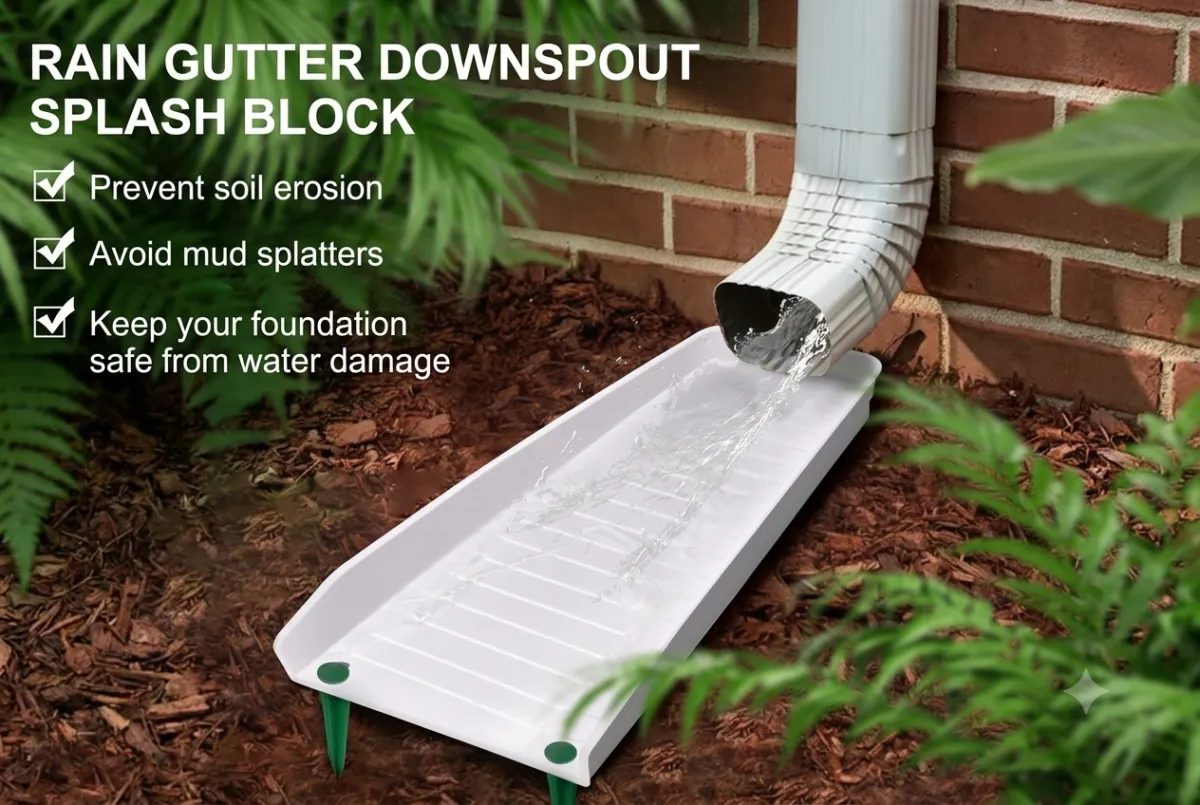
Downspout extensions are the easiest way to move water farther from your foundation without major excavation. Rigid plastic or metal extensions provide a durable, low‑profile solution, while hinged or flexible models can be folded out of the way for mowing or shovelling snow. Pairing extensions with concrete or plastic splash blocks helps spread water over a wider area, reducing erosion and pooling in one spot.
Where space is limited, or where you want a cleaner look, underground drains are a powerful tool. A buried pipe connected to your downspout can carry water to a lower part of your lot, a swale, or a rain garden. In Ottawa’s clay soils, adding a gravel‑filled trench (often called a French drain) around the discharge point helps water infiltrate slowly rather than sit on the surface. The key is to maintain a consistent slope in the pipe so water keeps moving and does not freeze solid in winter.
For environmentally minded Ottawa homeowners, rain barrels offer a way to capture some of the water from your downspouts before it reaches the ground. While they do not replace the need for proper downspout placement, they can reduce peak flows during storms and provide free water for gardens in summer. When using rain barrels, always include an overflow outlet that directs extra water to a safe discharge point away from your foundation, in line with the same principles described above.
If you are not sure whether your current downspout placement is appropriate, a simple inspection during different weather conditions can reveal a lot. Here is a practical checklist any Ottawa homeowner can use:
Walk your property during a steady rain. Look for overflowing gutters, water cascading over the edge, or streams of water pooling near the foundation. These are signs your downspouts are overloaded or poorly located.
Check the ends of each downspout. Measure how far they are from your foundation wall. If they end within 1–2 feet of the house, plan to extend them farther out to meet the recommended distances.
Observe where the water goes. Does it flow toward low spots, steps, or driveways? Does it run toward your neighbour’s yard? If so, consider repositioning the downspout or adding extensions and grading adjustments.
Inspect after a freeze–thaw cycle. Look for ice buildup near downspout discharge points, especially on walkways and driveways. Ice is a clear signal that water is not being directed to a safe, permeable area.
Look inside the basement. Damp spots, efflorescence (white salt deposits), or musty smells along certain walls may indicate that nearby downspouts are not placed or extended properly.
Many basic downspout improvements are within reach of a confident do‑it‑yourself homeowner. However, there are times when professional expertise is invaluable. In Ottawa, you should consider calling a qualified contractor, roofer, or drainage specialist if:
Your home has a history of basement flooding or severe dampness, and you suspect downspouts may be part of the problem.
Your lot has complicated slopes or is lower than neighbouring properties, making it difficult to find safe discharge points on your own.
You are planning a major renovation, such as adding a new roof line, deck, or extension, and want to ensure your downspout placement keeps up with the changes.
You are unsure how local by‑laws or easements affect where you can discharge stormwater on your property.
At first glance, a downspout may seem like a simple piece of metal attached to the side of your house. But in Ottawa’s demanding climate, it plays a critical role in protecting your biggest investment. The proper place of a downspout in Ottawa, Canada, is always defined by a few key principles:
Keep water well away from your foundation—ideally 6 to 8 feet or more, on ground that slopes away from the house.
Use natural grading to your advantage, sending water toward lawns, gardens, or other permeable areas where it can soak in safely.
Avoid discharging onto walkways, driveways, or public sidewalks, where water can freeze and create hazardous ice during winter.
Respect neighbouring properties and manage runoff within your own lot, using extensions, underground drains, or rain gardens where necessary.
Make sure you have enough downspouts for your roof size, so gutters do not overflow during heavy Ottawa rains or rapid snowmelt.
By taking the time to evaluate and improve your downspout placement, you are not just following good building practice—you are actively preventing foundation damage, reducing the risk of basement leaks, and making your property safer during icy seasons. Whether you choose simple extensions or a more advanced drainage system, the goal is the same: get roof water away from your home, and let the rest of your property handle it safely and responsibly.
If you live in Ottawa and have ever wondered whether your downspouts are in the right place, now is the perfect time to take a closer look. With a careful walk‑around, an understanding of how water moves across your lot, and the guidelines in this article, you can turn a simple piece of hardware into a powerful shield for your home—season after season, storm after storm.
Position downspouts well away from your foundation, use grading and extensions to guide water toward safe, permeable areas, and avoid sending runoff onto walkways, driveways, or neighbouring properties.
Ready to put these ideas into action? Contact us today to schedule a downspout and drainage assessment with a trusted Ottawa specialist, and take the next step toward a drier basement, a safer yard, and a longer‑lasting foundation—year‑round.
Bronson Johnson Seamless Eavestroughs Ottawa specializes in seamless eavestrough installation, eavestrough replacement, leaf-guard systems, and soffit and fascia repairs. Serving homeowners across Ontario with care and craftsmanship. With a 20-year material warranty, 5-year workmanship guarantee. Full licensing and insurance with A+ BBB rating and backed by over 397 verified HomeStars 5-star reviews. You’re not just getting new gutters—you’re getting peace of mind that lasts.
Protecting homes with Expert Eavestrough Ottawa, Soffit, and Fascia services.
📅 Serving the community since 2010 | Privacy Policy


Copyright ©2026 Bronson Johnson . All Rights Reserved. Designed by Optimized Websites