
Seasonal Home Checklist for Ottawa Homeowners
Home Maintenance, Eavestrough Installation, Ottawa Climate
The Ultimate Seasonal Exterior Checklist for Ottawa Homeowners: Protecting Your Home from Roofline to Foundation
Ottawa’s dramatic seasons are hard on homes. From heavy snow loads to sudden thaws and summer downpours, your exterior needs thoughtful, year‑round care. This guide brings together eavestrough installation best practices, practical exterior maintenance tips, and local climate insights to help you protect your biggest investment—season after season. For more background on professional eavestrough work in the region, you can also review resources from the Canadian Home Builders’ Association.
Why Ottawa’s Climate Demands a Strong Exterior Strategy
Ottawa homeowners face a unique combination of weather stresses. Winters bring prolonged freezing temperatures, heavy snow, and freeze‑thaw cycles. Spring can arrive quickly, with rapid snowmelt and saturated ground. Summers often include intense rainstorms, high humidity, and UV exposure. Fall adds leaf buildup and fluctuating temperatures that test every component of your home’s exterior—especially your eavestrough system and roofline details.
Without a proactive plan, these conditions can lead to overflowing eavestroughs, ice dams, foundation leaks, premature siding wear, and even interior water damage. A well‑designed, properly installed eavestrough system, combined with seasonal exterior maintenance, is your first line of defense against these risks.
The Role of Eavestroughs in Protecting Your Home
Eavestroughs are more than a finishing detail—they are a critical part of your home’s water management system. Their job is simple but essential: capture roof runoff, move it efficiently to downspouts, and discharge it safely away from your foundation, landscaping, and walkways. When they are undersized, poorly sloped, or clogged, water can spill over the sides, pool near your home, and find its way into places it should never go.
What Professional Eavestrough Installation Should Include
A professional eavestrough installation in Ottawa should be tailored to your home and local conditions. Key elements include:
Appropriate sizing and style — Most Ottawa homes benefit from 5‑inch or 6‑inch seamless aluminum eavestroughs that can handle heavy rainfall and rapid snowmelt without easily overflowing.
Correct slope and placement — Eavestroughs must be gently sloped toward downspouts to keep water moving. Even a small misalignment can create standing water, added weight, and premature sagging or separation from the fascia.
Strategic downspout locations — Downspouts should be placed where they can discharge water safely away from the home, not onto walkways, driveways, or neighboring properties. Extensions or splash pads are often needed to direct water well beyond the foundation line.
Secure fastening systems — Quality hangers, installed at appropriate intervals, help eavestroughs stand up to heavy snow, ice, and wind loads common in Ottawa winters.
📌 Key Takeaway: Proper eavestrough installation is not just about appearance—it is about performance under Ottawa’s most challenging weather events.
Signs Your Eavestroughs May Need Attention or Replacement
Even well‑installed systems will eventually require maintenance or replacement. Watch for these warning signs as you plan your exterior upkeep:
Visible sagging, pulling away from the fascia, or noticeable gaps between sections.
Frequent overflow during moderate rain, even after cleaning, indicating capacity or slope issues.
Peeling paint, soft wood, or staining on fascia boards, soffits, or siding near the roofline.
Ice buildup along the eaves in winter, which may signal poor drainage, inadequate insulation, or ventilation problems contributing to ice dams.
A Season‑by‑Season Exterior Maintenance Plan for Ottawa Homes
A structured, seasonal approach is the most effective way to keep your exterior in top condition. By tackling the right tasks at the right time, you reduce the risk of surprise repairs, extend the life of your exterior materials, and keep your home looking its best in every season.
Late Winter and Early Spring: Preparing for Thaw and Runoff
As temperatures begin to fluctuate above and below freezing, focus on how melting snow and ice will move around your home. This is when your eavestroughs and downspouts are most critical for protecting your foundation and preventing leaks.
Walk the perimeter of your home and look for ice buildup around downspouts, blocked extensions, or areas where water is pooling near the foundation. Clear safe access paths and remove obstructions where possible.
Once conditions allow, schedule a thorough eavestrough cleaning to remove winter debris, grit from shingles, and any leaves that were trapped under snow in late fall.
Inspect caulking around windows, doors, and penetrations such as vents and utility lines. Freeze‑thaw cycles can cause sealants to crack, creating potential pathways for water intrusion when spring rains arrive.
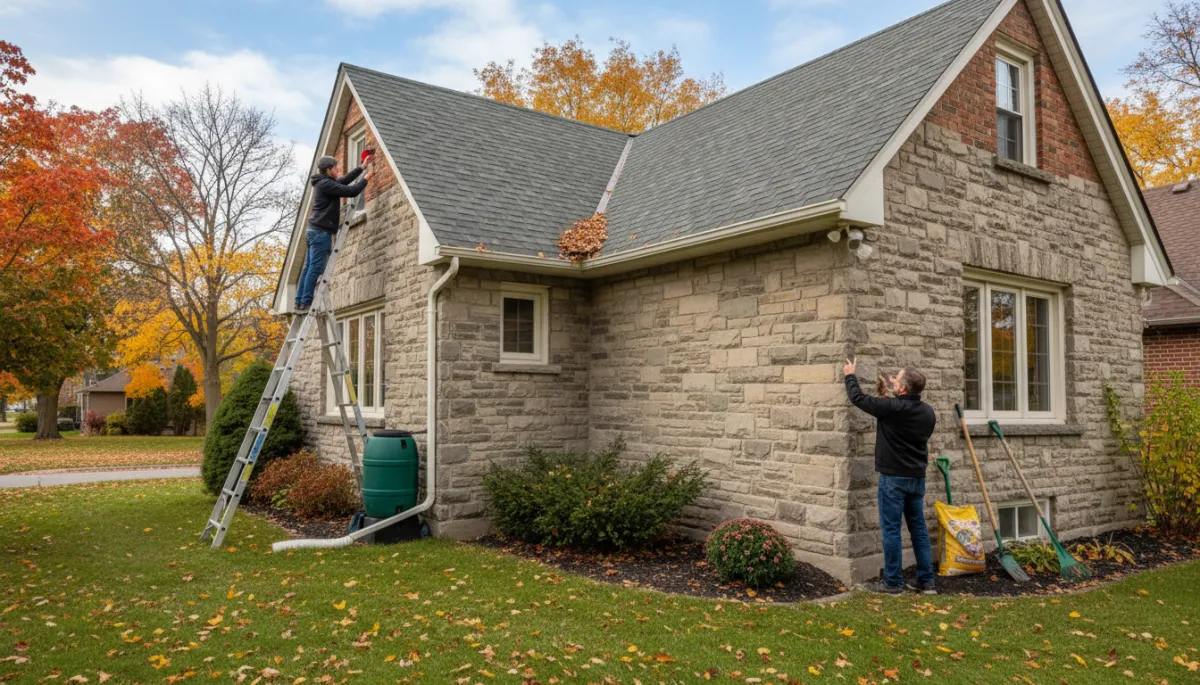
A spring eavestrough inspection helps prevent costly water damage during rapid snowmelt.
Late Spring and Summer: Managing Rain, Heat, and UV Exposure
Once the risk of hard frost has passed, shift your attention to heavy rainfall, strong sun, and humidity. These conditions affect siding, sealants, and any exposed wood or metal elements on your exterior, as well as your eavestrough system’s ability to handle sudden downpours.
After a significant rainstorm, step outside and observe your eavestroughs in action. Look for any sections where water spills over the edge, leaks from seams, or fails to reach the downspouts efficiently. These are strong indicators that repairs or adjustments are needed.
Inspect siding for signs of warping, discoloration, or mildew growth, particularly beneath rooflines and near downspout discharge areas. Persistent staining can signal chronic moisture issues that should be addressed promptly.
Check painted or stained exterior wood—such as trim, fascia, and window frames—for peeling, flaking, or bare patches. Ottawa’s summer sun can accelerate deterioration, so timely touch‑ups help prevent deeper damage.
💡 Pro Tip: Use a summer storm as a live test of your eavestrough installation. Observing how water moves during heavy rain reveals issues that are hard to spot in dry weather.
Fall: Clearing Debris and Preparing for Snow and Ice
Fall is arguably the most important season for exterior maintenance in Ottawa. Leaves, twigs, and organic debris can quickly fill eavestroughs and downspouts, creating blockages just as snow and freezing temperatures arrive. A focused fall routine significantly reduces winter risks.
Schedule at least one comprehensive eavestrough cleaning after the majority of leaves have fallen. Homes with mature trees may require two cleanings—one mid‑season and another closer to winter—to keep channels clear.
Confirm that all downspouts are free‑flowing and that extensions are properly attached and directed away from the foundation. This step is critical for managing water during mid‑winter thaws and early spring melt.
Inspect roof edges for damaged shingles, exposed nail heads, or deteriorated flashing around chimneys, vents, and skylights. Addressing these issues before snow covers the roof can prevent leaks and ice‑related damage.
Winter: Monitoring, Not Major Work
Winter is not the time for significant exterior repairs, but it is an important period for monitoring. Observing how your home performs in cold, snowy conditions provides valuable information for future improvements and confirms whether your fall preparation was effective.
Watch for persistent icicles or ice ridges along the eaves. While some icicle formation is normal, heavy or recurring ice can indicate inadequate attic insulation, poor ventilation, or blocked eavestroughs that need attention once conditions are safe.
Notice any interior signs of trouble during thaws—such as water staining on ceilings near exterior walls, condensation on windows, or damp spots in the basement. These may be early indicators of exterior water management issues that can be addressed in spring.
⚠️ Warning: Avoid attempting to chip or pry ice from eavestroughs or roofs. This can cause significant damage. Instead, use winter observations to plan targeted improvements for the next warm season.
Connecting Eavestrough Performance to the Rest of Your Exterior
Eavestroughs do not work in isolation—they interact with every other exterior system, from your roof to your foundation. Understanding these connections helps you make more informed decisions about improvements and prioritize projects that offer the greatest protection for your home in Ottawa’s climate.
Roof, Soffit, and Fascia: Supporting a Healthy Roofline
A durable roof, ventilated soffit, and sound fascia boards work together to support your eavestrough system. When one component fails, the others are quickly affected. For example, overflowing eavestroughs can saturate fascia boards, causing rot that undermines fasteners and leads to sagging sections. In turn, this can compromise the roof edge and create openings for water intrusion.
Regularly inspect these elements for peeling paint, soft spots, or visible gaps. Addressing minor issues early—such as replacing a small section of fascia or sealing a joint—helps preserve the integrity of your entire roofline and supports reliable eavestrough performance in Ottawa’s demanding conditions.
Siding and Foundation: Where Water Ultimately Ends Up
The ultimate goal of any exterior water management plan is to keep moisture away from your foundation and out of your living spaces. When eavestroughs and downspouts are functioning correctly, water is carried safely down and away. When they are not, siding and foundation walls often show the first signs of trouble—staining, efflorescence, or hairline cracks that widen over time.
Pay particular attention to areas where downspouts discharge near corners or where grading slopes toward the house. In Ottawa, where spring thaw can saturate the ground, even small drainage issues can translate into basement moisture, musty odors, or visible leaks. Combining effective eavestrough installation with proper grading and, where appropriate, extensions or splash pads, provides a robust defense against these problems. For additional guidance on managing moisture around foundations, see homeowner resources from the Canada Mortgage and Housing Corporation (CMHC).
When to Call a Professional for Exterior and Eavestrough Work
Many homeowners are comfortable performing basic exterior checks and light maintenance. However, Ottawa’s climate and typical two‑storey home designs mean that some tasks are safer and more effective when handled by experienced professionals with the right equipment and training.
Eavestrough installation and replacement — Proper sizing, sloping, and secure fastening require specialized tools and expertise, especially on higher or complex rooflines.
Major repairs at height — Work involving ladders near power lines, steep roofs, or multi‑storey sections should be performed by trained crews who follow safety protocols and use appropriate fall‑protection equipment.
Persistent water issues — If you notice recurring leaks, interior staining, or foundation moisture despite regular maintenance, a professional assessment can identify underlying causes and recommend long‑term solutions tailored to Ottawa’s weather patterns.
📌 Key Takeaway: Partnering with a reputable exterior contractor helps ensure that your eavestrough installation and maintenance decisions align with local climate realities, not just short‑term fixes. You can also cross‑check best practices with consumer advice from the Better Business Bureau when evaluating service providers.
Building a Long‑Term Exterior Maintenance Routine for Peace of Mind
A well‑maintained exterior does more than protect your home—it supports comfort, energy efficiency, curb appeal, and long‑term value. In a city like Ottawa, where weather extremes are part of everyday life, a thoughtful routine built around eavestrough performance and seasonal checks is one of the most effective investments you can make as a homeowner. To see how one local team approaches this kind of work, you can learn more about us at Bronson Johnson Seamless Eavestroughs.
Start by mapping out a simple annual schedule: spring inspections after thaw, summer performance checks during heavy rain, fall cleaning and preparation, and winter monitoring. Combine these with periodic professional assessments—especially when you are considering upgrades or notice warning signs—and you will be well positioned to navigate Ottawa’s climate with confidence.
Ultimately, exterior maintenance is about staying ahead of problems, rather than reacting to them. By giving careful attention to eavestrough installation, coordinating your roofline, siding, and foundation strategies, and respecting the realities of Ottawa’s weather, you can help ensure that your home remains dry, secure, and attractive for years to come.
📌 Key Takeaway: Focus on four pillars for long‑term protection: well‑designed eavestroughs, a clear seasonal checklist, regular inspections of roof, siding, and foundation, and professional help when issues go beyond basic maintenance. Together, these steps turn Ottawa’s challenging climate into something you are prepared for—not something you have to fear.
Now is the best time to act. Take 10 minutes today to sketch your own seasonal exterior checklist, note any trouble spots you have observed, and decide which tasks you will handle yourself and which you will discuss with a trusted professional. If you are ready to put a stronger eavestrough system at the centre of that plan, reach out to a qualified Ottawa installer—such as the team at Bronson Johnson Seamless Eavestroughs—to schedule a consultation and start protecting your home, one season at a time.